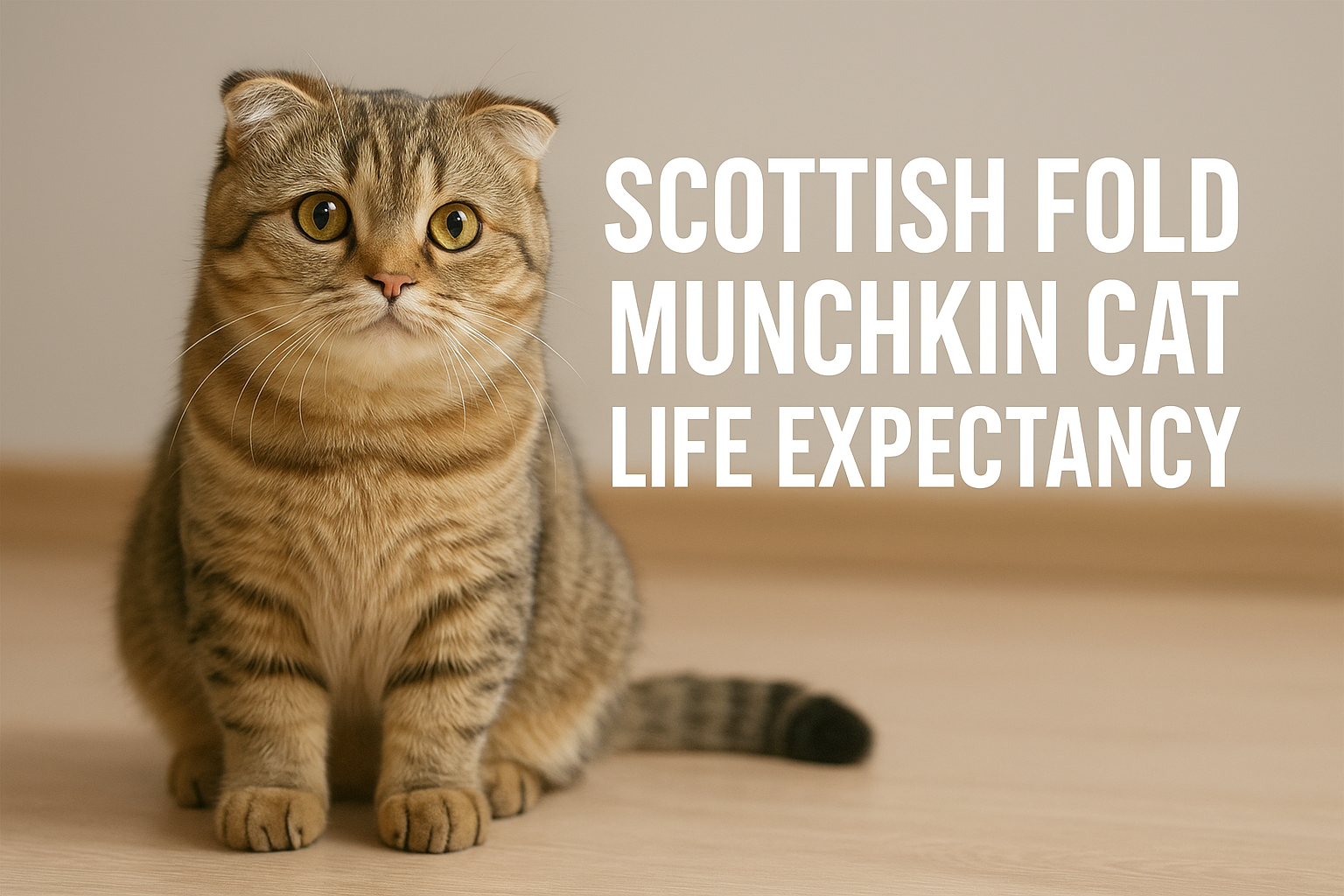

When people think of unique cats, two names often come up: the Scottish Fold and the Munchkin. Each breed has its own story, physical traits, and health considerations. But when these two breeds are combined into a Scottish Fold Munchkin cats hybrid, questions about life expectancy, health, and daily care naturally follow.
This article takes a close look at the Scottish Fold Munchkin, explains the life expectancy of Munchkin cats, and shares insights backed by real-life examples. If you’re thinking about adopting one or just curious about these cats, this guide will walk you through the facts without unnecessary fluff.
What is a Scottish Fold Munchkin Cats?
A Scottish Fold Munchkin cat is a hybrid created by crossing the Scottish Fold and the Munchkin cat.
- Scottish Fold: Known for their folded ears caused by a genetic mutation in cartilage.
- Munchkin: Famous for their short legs, also due to a genetic mutation affecting bone growth.
When these two breeds are combined, you get a small-to-medium-sized cat with short legs and, in some cases, folded ears. Not all kittens from this cross will have both traits—some may only inherit the folded ears or the short legs.
Average weight: 5–9 lbs
Height: 5–8 inches at the shoulder
Appearance: Rounded head, compact body, short legs, and sometimes folded ears.
This hybrid is not recognized by every cat association because of health concerns related to combining two breeds with known genetic conditions.
Why People Are Interested in This Hybrid
The appeal comes down to uniqueness. Pet lovers are drawn to unusual traits like folded ears and short legs. Social media has also amplified interest, with Scottish Fold Munchkin kittens often going viral.
However, the very features that make them popular are also tied to genetic mutations, which can affect health. This brings us to the key question: How long do Munchkin cats, and by extension Scottish Fold Munchkins, actually live?
Life Expectancy of Munchkin Cats
One of the biggest myths about Munchkin cats is that their short legs shorten their lifespan. Let’s look at the facts.
- Average life expectancy of Munchkin cats: 12–15 years (similar to many domestic cats).
- Factors affecting lifespan:
- Genetics (inherited conditions)
- Diet and weight management
- Indoor vs. outdoor lifestyle
- Veterinary care and preventive health
Research and case studies show that Munchkin cats can live long, healthy lives if given proper care. Their short legs don’t directly reduce lifespan, but mobility issues or related joint problems can appear in some cats.
Important note: Not all Munchkin cats suffer from severe mobility problems. Many live active lives, run, and jump, though often not as high as long-legged cats.
Health Considerations for Scottish Fold Munchkin Cats
When combining two breeds with genetic mutations, owners should be prepared for possible health issues.
- Osteochondrodysplasia (Scottish Fold gene)
- A skeletal condition linked to cartilage development.
- Can cause joint pain, stiffness, or arthritis.
- Lordosis (Munchkin gene)
- A condition where the spine curves downward.
- Rare, but can affect breathing and posture.
- General health risks
- Obesity: Short-legged cats may burn fewer calories.
- Joint strain: Added pressure on knees and hips.
- Heart disease: Found in some Scottish Folds.
Case example: A veterinary report on mixed-breed Scottish Fold Munchkin cats showed that while many live normal lives, some develop painful joint problems by middle age. Regular checkups and weight control play a major role in managing these issues.
Everyday Care for Scottish Fold Munchkin Cats
To give these cats the best chance at a long and healthy life, owners should focus on daily care routines.
- Nutrition:
- High-protein cat food with controlled calories.
- Avoid overfeeding since obesity adds stress to joints.
- Exercise:
- Play sessions with wand toys or balls.
- Cat trees with ramps instead of tall jumps.
- Veterinary care:
- Annual checkups.
- Early screening for joint or heart conditions.
- Comfortable environment:
- Low-level furniture and steps for climbing.
- Soft bedding to reduce joint strain.
Comparing Life Expectancy: Munchkin vs. Scottish Fold vs. Hybrid
| Breed/Hybrid | Average Lifespan | Common Health Risks |
|---|---|---|
| Munchkin | 12–15 years | Lordosis, obesity, joint strain |
| Scottish Fold | 11–14 years | Osteochondrodysplasia, arthritis, heart disease |
| Scottish Fold Munchkin mix | 11–14 years | Combination of both risk factors |
This table shows that the hybrid doesn’t necessarily live shorter lives than the parent breeds, but risks can overlap. Responsible breeding and regular veterinary oversight are critical.
Real-World Case Studies
- Case 1: Indoor Munchkin cat in the U.S.
A family kept their Munchkin indoors with a balanced diet. The cat lived 14 years with minimal health problems, only developing mild arthritis in old age. - Case 2: Scottish Fold Munchkin in Asia
Adopted at 6 months, the cat developed mobility problems at 7 years due to arthritis linked to osteochondrodysplasia. With pain management and lifestyle adjustments, the cat lived comfortably until 12 years old. - Case 3: Rescue Munchkin cat
Found abandoned, this cat lived outdoors for several years. Life expectancy was shorter (around 8 years) due to injury and lack of medical care, showing the importance of an indoor environment.
These cases highlight that lifestyle and medical care can have as much impact as genetics.
Adoption and Cost Considerations
The popularity of Scottish Fold Munchkin cats has led to high demand. Prices vary depending on breeder reputation, health testing, and location.
- Munchkin cats: $800–$2,000 (source: Petfinder).
- Scottish Fold cats: $1,000–$3,000.
- Scottish Fold Munchkin hybrids: $1,500–$5,000 depending on pedigree and traits.
Adopters should be cautious about backyard breeders who may not test for genetic conditions. Look for breeders who provide veterinary records, genetic health screenings, and transparent information about the cat’s background.
Ethical Debate
Some cat associations, such as The International Cat Association (TICA), recognize the Munchkin. However, others, like the GCCF (Governing Council of the Cat Fancy) in the UK, oppose breeding Munchkins due to concerns about promoting genetic mutations.
Similarly, Scottish Folds are controversial because of the link between folded ears and joint disease. Crossing the two breeds has raised ethical questions in the veterinary community.
As an owner or adopter, being informed about these debates helps you make responsible choices.
Key Tips for Owners
- Adopt from responsible breeders or rescues.
- Schedule regular vet visits, especially for joint health.
- Maintain a healthy weight to reduce stress on legs and joints.
- Adjust the home with ramps and steps for easy mobility.
- Stay alert for early signs of stiffness, limping, or discomfort.
Conclusion
The Scottish Fold Munchkin cat is an unusual hybrid that combines two highly recognizable traits: folded ears and short legs. While the appearance attracts attention, it’s important to understand the potential health risks and responsibilities that come with owning one.
The life expectancy of Munchkin cats is generally 12–15 years, and Scottish Fold Munchkins can live similar lifespans with proper care. Genetics play a role, but environment, diet, and preventive veterinary care are equally important.
If you’re considering adoption, focus on responsible sources, prepare for possible health challenges, and commit to long-term care. With the right approach, these cats can live fulfilling, comfortable, and active lives.
✅ For more insights on cat health and breeds, check trusted resources like PetMD and International Cat Care.
📌 FAQ: Scottish Fold Munchkin Cats & Munchkin Cat Life Expectancy
Q1: How long do Munchkin cats live?
Munchkin cats typically live 12–15 years, which is similar to many other domestic cats. Their short legs do not directly reduce lifespan, but they may be more prone to joint or spinal issues.
Q2: What is the life expectancy of a Scottish Fold Munchkin cat?
A Scottish Fold Munchkin cat usually lives around 11–14 years. With good care, a healthy diet, and regular veterinary checkups, many live comfortably into their teens.
Q3: Do Munchkin cats have health problems?
Yes, some Munchkin cats may face lordosis (a spinal curve) or joint strain. Not every cat develops these problems, but owners should watch for stiffness, limping, or reduced mobility.
Q4: Are Scottish Fold Munchkin cats healthy?
They can be, but this hybrid combines two breeds with genetic risks. Scottish Folds may develop osteochondrodysplasia (a cartilage disorder), while Munchkins may face spinal or joint issues. Responsible breeding and preventive care are very important.
Q5: Do short legs affect how Munchkin cats live?
Short legs don’t stop Munchkin cats from running, playing, or climbing. They may not jump as high as other cats, but most adapt well if the home is set up with ramps, steps, and safe climbing options.
Q6: How much does a Scottish Fold Munchkin cat cost?
The price usually ranges from $1,500 to $5,000, depending on breeder reputation, location, and whether the kitten has both folded ears and short legs. Always ask for health records before buying.
Q7: Are Munchkin cats recognized by cat associations?
Some organizations, like TICA (The International Cat Association), recognize the Munchkin breed. Others, like the GCCF in the UK, do not due to ethical concerns about breeding cats with genetic mutations.