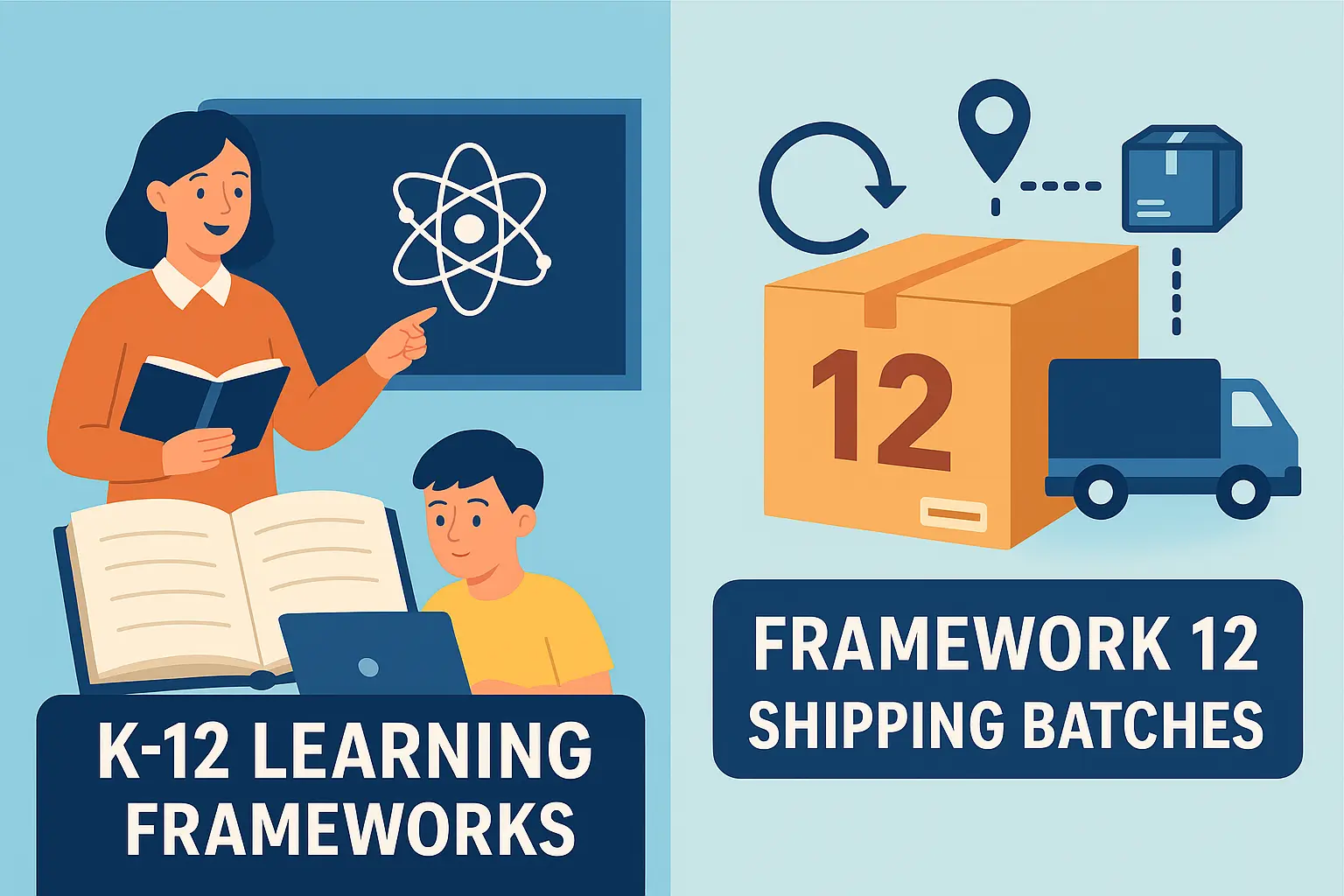

Education and technology are two areas that often shape how society grows. On one side, schools and universities are using learning frameworks to improve teaching quality. On the other side, technology-driven companies are experimenting with frameworks for efficiency, like Framework 12 shipping batches in product delivery. When these areas overlap, they provide valuable insights into how structure and planning can improve both industries.
1. Understanding Framework 12 Shipping Batches
1.1 What Does Framework 12 Mean in Shipping?
Framework 12 is often discussed in the logistics and tech hardware industry. The term refers to shipping batches that are released in cycles, usually in groups of 12, allowing companies to manage product delivery in stages instead of all at once.
For example, when a laptop manufacturer like Framework Computer (a company producing modular laptops) rolls out devices, they organize pre-orders and shipments in batch cycles. Customers are grouped into “Batch 1, Batch 2, Batch 3” and so on, ensuring smooth supply chain management.
1.2 Why Do Companies Use Batch Shipping?
Companies use batch-based frameworks for several reasons:
- Inventory control: Production facilities can only produce a limited number of units at a time.
- Customer transparency: Customers can track their orders by batch number.
- Risk management: If a technical issue arises in one batch, future batches can be adjusted before shipping.
- Cash flow alignment: Shipping in stages allows the business to manage costs better.
A case study from Framework Laptops shows that when they launched their modular laptop model, demand exceeded supply. Instead of delaying all shipments, they created Batch 12 shipping cycles so that buyers knew exactly when their device would ship.
Read more about batch shipping in modular laptop launches (external source).
2. Elite K-12 Learning Frameworks
2.1 What Is a Learning Framework in K-12?
A K-12 learning framework is a structured guideline that schools follow to ensure consistent teaching practices, assessment strategies, and student engagement methods. Elite K-12 frameworks are usually adopted by top schools and international programs.
They include:
- Curriculum design: Subjects and skills taught from Kindergarten through 12th grade.
- Teaching methods: Instructional strategies like inquiry-based learning or project-based learning.
- Assessment tools: How schools measure student performance.
- Equity standards: Ensuring all students get equal access to learning opportunities.
2.2 Examples of Elite K-12 Frameworks
- IB (International Baccalaureate) Framework
- Focuses on critical thinking, international-mindedness, and research skills.
- Schools in over 150 countries use it.
- Common Core State Standards (CCSS) in the U.S.
- Provides consistent benchmarks in English and Math.
- Helps students transition across states without major academic gaps.
- Cambridge International Framework
- Widely used in private schools.
- Emphasizes subject mastery and global perspectives.
- Danielson Framework for Teaching (used as a teacher evaluation system)
- Though not strictly student-focused, it impacts teaching quality directly.
These elite frameworks shape how schools operate and prepare students for higher education or careers.
2.3 Why Do Elite Schools Use Learning Frameworks?
Elite schools often attract parents who expect measurable outcomes. Frameworks provide:
- Accountability: Teachers follow proven structures.
- Consistency: No matter who teaches, students receive similar quality instruction.
- Global recognition: Universities often value IB or Cambridge certifications.
For instance, Singapore’s K-12 system, considered among the best globally, follows a structured national framework emphasizing math and science literacy.
See Singapore’s Ministry of Education framework (external link).
3. A Framework for K-12 Science Education
3.1 What Is This Framework?
In 2012, the National Research Council (NRC) published “A Framework for K-12 Science Education.” This document became the foundation for the Next Generation Science Standards (NGSS) in the U.S.
The framework outlines what students should know in science by the time they graduate high school. It is not a curriculum but a guideline that helps states and schools design their science programs.
3.2 The Three Dimensions of the Framework
The NRC framework highlights three essential areas:
- Scientific and Engineering Practices
- Encourages students to ask questions, build models, analyze data, and design experiments.
- Crosscutting Concepts
- Themes like cause and effect, patterns, and energy transfer that apply across all sciences.
- Disciplinary Core Ideas
- Fundamental knowledge in Physical Science, Life Science, Earth & Space Science, and Engineering.
3.3 Why This Framework Matters
Before the NRC’s framework, U.S. science education was often fragmented. Some states had strong programs, while others lacked consistency. With the introduction of NGSS (based on this framework), there is now:
- Consistency across states.
- Focus on real-world applications instead of rote memorization.
- Integration of engineering and technology with science education.
For example, a middle school student in California and one in New Jersey following NGSS will both learn similar concepts and skills, even though their schools are in different regions.
Explore NGSS official site here.
4. Case Study Comparisons: Shipping vs Learning Frameworks
It may seem unusual to compare Framework 12 shipping batches with K-12 learning frameworks, but both share a common principle: structured systems for better outcomes.
- Shipping batches: Organize product delivery in manageable cycles.
- Learning frameworks: Organize education delivery in consistent structures.
4.1 Lessons from Shipping for Education
- Just as shipping batches provide transparency to customers, learning frameworks provide transparency to parents and students.
- Batch adjustments (fixing errors before the next release) mirror curriculum adjustments when schools see performance gaps.
4.2 Lessons from Education for Shipping
- Elite K-12 frameworks emphasize equity and accessibility, which logistics companies can adopt by ensuring fair delivery timelines globally.
- Science frameworks highlight crosscutting concepts, which logistics can apply to improve supply chain systems across industries.
5. Challenges in Applying Frameworks
5.1 Shipping Framework Challenges
- Delays due to supply chain disruptions.
- Customer dissatisfaction if batches aren’t clearly communicated.
- Scalability issues when demand grows beyond planned batches.
5.2 K-12 Learning Framework Challenges
- Teacher training: Not all teachers are prepared for new methods.
- Resource gaps: Elite frameworks often require technology or lab equipment not available in every school.
- Policy differences: Education frameworks need alignment across local, state, and national levels.
6. Future Directions
6.1 Framework 12 in Tech Shipping
As companies scale globally, we may see AI-driven batch forecasting that predicts shipping needs and automatically assigns customers to batches based on location and production speed.
6.2 Elite K-12 Learning Frameworks
Schools are moving toward hybrid frameworks that combine traditional learning with online platforms. Personalized learning powered by AI will likely be built on existing frameworks like IB or Cambridge.
6.3 K-12 Science Education
The next phase of science education frameworks will integrate climate change studies, AI, and biotechnology as core ideas. This ensures students are prepared for the scientific challenges of the 21st century.
7. Final Thoughts
Frameworks, whether in technology shipping batches or education systems, serve one purpose: to bring order, consistency, and trust to a complex process.
- For customers waiting for laptops, Framework 12 shipping batches mean predictable delivery.
- For students in elite schools, learning frameworks mean consistent opportunities.
- For science education across the U.S., NRC’s Framework provides a roadmap for future-ready learners.
When industries adopt structured approaches, outcomes improve. That’s the real power of frameworks.