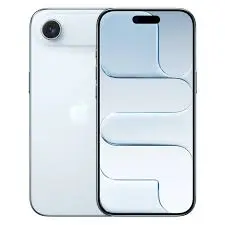

When Apple introduced the iPhone Air as part of the iPhone 17 line (alongside iPhone 17, 17 Pro, and 17 Pro Max), it shook up expectations. It’s not just another variant. It points to where phone design, wireless technology, and pricing are heading. This post will examine: what the iPhone Air is, how it pushes the wireless future, what it costs, and what you should think about if you buy one. I use real data, compare with the competition, and treat trade-offs honestly.
- Launch date: Apple unveiled the iPhone Air on September 9, 2025, during its iPhone 17 event. PhoneArena+2Tom's Guide+2
- Pre-orders & availability: Preorders started September 12, 2025; available in stores from September 19. PhoneArena
- Design features:
• It is Apple’s thinnest iPhone so far, at 5.6 mm thick. PhoneArena+1
• Uses titanium build, and reinforced front and back with its newer Ceramic Shield 2 etc. PhoneArena
• It has a 6.5-inch display (Super Retina XDR) with 120Hz refresh rate (ProMotion), adaptive when in use, scaling down when idle to save power. PhoneArena - Cameras & battery:
• Only one rear camera vs more on Pro models. PhoneArena
• Smaller battery than the Pro siblings. Exact mAh not disclosed by Apple; third‐party estimates hover around 2,800 mAh. PhoneArena
These design choices show Apple wants a phone that looks and feels lighter, thinner, more delicate in profile—but with trade-offs (battery, camera, etc.). This is important when considering wireless tech and price.
iPhone Air and the Wireless Future
“Wireless future” is a big phrase. In this case, iPhone Air is signaling several trends in wireless tech, connectivity, design, and power.
Here are some of the key points:
- Wireless Charging Improvements
- iPhone 17 series supports the Qi 2.2 wireless charging standard (also called Qi25W in many reports). This means faster wireless charging via compatible chargers, not just Apple's proprietary MagSafe ones. Tom's Guide+1
- However, iPhone Air’s wireless charging speed is capped lower than what Pro models can do. According to reports, Air is limited to ~20W wireless charging. The Verge+2Tom's Guide+2
- Connectivity and Networking Chips
- Apple introduced a new network chip called N1 in the iPhone 17 line, including iPhone Air. It supports newer wireless standards: Wi-Fi 7, Bluetooth 6, and the smart-home protocol Thread. The Verge+1
- Also there’s a C1X 5G modem, intended to be faster and more efficient. Tom's Guide+1
- Design trade-offs due to wireless constraints
- Wireless features require antennas, power delivery, cooling. Making the phone thinner (5.6 mm) means less room for battery. As mentioned, battery capacity is smaller. PhoneArena+1
- Also, durability is a concern. Thin phones are easier to bend, break, or damage. Apple claims improved materials (reinforcements, titanium, Ceramic Shield) to counter this. PhoneArena+1
- Software & power management
- New modes in iOS 26 like Adaptive Power Mode help manage power by learning user behavior. That matters especially with smaller battery capacity. PhoneArena
- Display tech that adapts refresh rate (high when needed, low when idle) helps reduce wasted power. This is part of making wireless features usable without draining too fast.
- Trends toward eSIM, lighter cables, less hardware bulk
- iPhone Air uses eSIM only (no physical SIM slot). Reduces physical hardware, room for components. PhoneArena
- USB-C or faster charging via cables is also present, but the wireless side is growing in importance.
So, iPhone Air is not just about being thin—it is a test bed for what wireless future might look like: fast wireless charging, more efficient chips, less bulk, more reliance on over-air connections rather than wired, etc.
Price: What iPhone Air Costs, What You Get, What You Give Up
Money matters. For many, the question is: is the iPhone Air worth the price? Let’s break down what Apple charges, what you pay in hidden ways, and what trade-offs you accept.
Official Price
Here are the key price points for iPhone Air. PhoneArena
| Storage | Price (USD) |
|---|---|
| 256 GB | $999 |
| 512 GB | $1,199 |
| 1 TB | $1,399 |
So Air starts at $999, which is more expensive than earlier Plus models that it is replacing. PhoneArena+1
Price vs Other iPhone 17 Models
To put it in context:
- Standard iPhone 17 starts at $799 for 256 GB. Tom's Guide
- The Pro models are more expensive; Pro models add camera features, larger batteries, etc. PhoneArena+1
Hence iPhone Air sits in between standard iPhone 17 and Pro models in terms of price and some features.
Price in Different Markets (Estimate & What It Means Locally)
While Apple lists $999 as base price (USD) in US, actual cost in different countries includes taxes, import duties, currency changes, etc. For example:
- In countries with high import tax, the final cost may be 20-40% higher than USD equivalent.
- Carrier subsidies may differ; trade‐in programs may be weaker or stronger.
If you live in Bangladesh (or similar country), likely price will be well above USD ↔ BDT conversion, plus import, plus VAT. So deciding whether to buy locally or via import matters. Also warranty support, service centers, etc.
Should You Buy iPhone Air?
Here are some guiding questions to help decide.
- How do you use your phone daily?
If battery life and camera are central (for work or content), maybe Pro or standard 17 is better. If portability, design, weight matter more, Air can be good. - How long do you keep a phone?
If you plan to keep it for 4+ years, the trade-offs (battery, camera) become important. Standards will improve; Air may lag in some domains. - Is wireless tech important to you?
If you care about wireless charging, faster Wi-Fi, Bluetooth, etc., then Air gives you a lot of what’s new. But only if you use them. If you don’t use wireless chargers, or don’t care about highest data transfer, maybe less so. - Budget considerations
Even though base price is $999, you may spend more for higher storage, or due to import/currency. Also accessories, wireless chargers, etc., add cost. - Resale, durability, repair costs
Slim phones often harder to repair. Damage to thin back or screen might cost more. So consider likely repair / maintenance.
Conclusion
The iPhone Air (2025) is a significant step for Apple. It signals that the “Air” line is not just about being thin—it’s about defining what wireless future could look like: faster wireless charging, better connectivity, less bulk, more reliance on over-air data rather than wires. But it comes with real trade-offs: battery, camera, fragility, cost.
If you are someone who values design, wants newer wireless features, and don’t mind charging more often or accepting less camera flexibility, iPhone Air may make sense. If battery life, ruggedness, or advanced camera work are priorities, a Pro model or standard iPhone 17 might offer more long-term value.